Guangzhou Travel Guide

Written by J. C.
Published August 2018



Search Online
Recommended By


Visitors Online
 Tour Options Pearl River Delta Tours Zhongshan 1 Day Tour
Zhongshan Private Day Tour from Guangzhou or Shenzhen
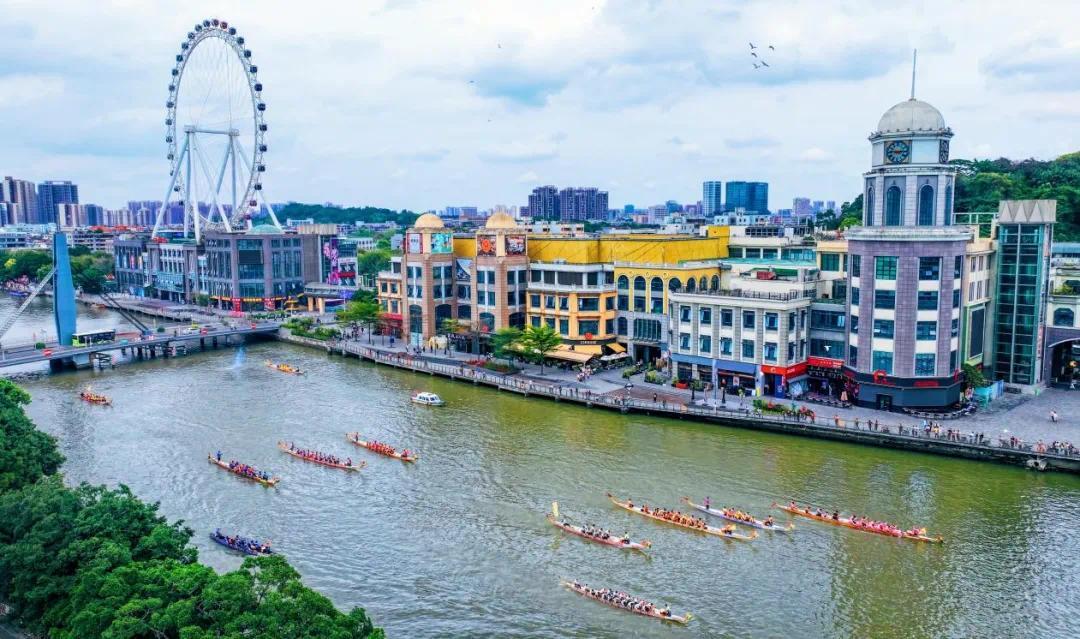
Looking for a private Zhongshan day tour from Guangzhou or Shenzhen? This one-day cultural route connects the ancestral village of Sun Yat-sen, his former residence in Cuiheng, a traditional Hakka lunch near Wugui Mountain, the 500-year-old Dongmen Bazaar on selected lunar-calendar dates, and a guided walk through the historic core of Shiqi.
Zhongshan was historically known as Xiangshan, often written as Heungshan in older overseas Chinese records. The county was renamed Zhongshan in 1925 in memory of Dr. Sun Yat-sen. Rather than presenting the city as only his birthplace, this tour explains the wider Xiangshan story: ancient island geography, overseas migration, modern commerce, ancestral villages and the rise of Shiqi as the regional administrative and trading center.
The tour is private only, with downtown hotel pickup, flexible pacing and no forced shopping. It can also be adapted into a Zhongshan ancestral roots tour for overseas Chinese families who know the village name, surname, ancestral hall, family genealogy or an older romanized place name.
Zhongshan Private Day Tour at a Glance
If you are using Shenzhen as your base, Zhongshan is one of several Pearl River Delta destinations that can be visited on a private day trip. You can also compare Kaiping, Taishan / Toisan, Dongguan and Shunde in our Private Day Tours from Shenzhen guide.
Travelers crossing from Hong Kong via Lok Ma Chau can arrange Futian Port pickup for the Zhongshan day tour, subject to the agreed meeting time and border-crossing schedule. You do not need to stay overnight in Guangzhou first.
Why Visit Zhongshan?
Zhongshan is one of the most historically important yet overlooked cities in the Pearl River Delta. Its old name, Xiangshan, was traditionally linked to the fragrant flowers and unusual plants of the Wugui Mountain area. Ancient Xiangshan developed from islands and hills around the Pearl River estuary; river sediment gradually created the alluvial plains that now contain much of northern Zhongshan and the Shiqi urban area.
The city is internationally associated with Sun Yat-sen, but its significance is broader. The founders of China’s four famous early modern department-store companies—Sincere, Wing On, Xin Xin and Daxin—were all from old Xiangshan. Their careers connect Zhongshan with Hong Kong, Shanghai, Guangzhou, Australia and the wider overseas Chinese commercial world.
For travelers with two days, a meaningful combination is a Guangzhou Sai Kwan / Xiguan history tour followed by this Zhongshan route. In Guangzhou, you can see and discuss the commercial world shaped by firms such as Sincere and Daxin; in Zhongshan, you explore the villages, migration culture and hometown environment from which these entrepreneurs emerged.
Most standard Zhongshan day trips concentrate on a film studio, a classical-style garden or quick photo stops. This itinerary instead combines a real ancestral village, Sun Yat-sen’s childhood environment, a functioning traditional bazaar and the historical structure of Shiqi old town.
Recommended Zhongshan One-Day Itinerary
The sightseeing order below is retained for the standard route. Timing may be adjusted for traffic, museum access, weather and the lunar-calendar market schedule, but the route is designed to move from the rural and ancestral landscape of Nanlang toward the historic urban center of Shiqi.
1. Zuobu Village: Sun Yat-sen’s Ancestral Village

Begin in Zuobu Village, a historic Nanlang village with more than six centuries of settlement history. It is known as the ancestral home of Sun Yat-sen and the hometown of film star Ruan Lingyu, cartoonist Fang Cheng, revolutionary Ou Chu, entrepreneur Fang Juzan and Canton–Hankow Railway official Ou Gengxiang.
The visit focuses on the relationship between village landscape and overseas mobility: ancestral halls, old lanes, late-Qing and Republican-period buildings, rice fields and the way a relatively small village produced people whose careers reached far beyond Guangdong. This stop also provides useful context before visiting Sun Yat-sen’s former residence.
2. Museum of Dr. Sun Yat-sen and Cuiheng Folk Houses

The Museum of Dr. Sun Yat-sen is a large heritage complex in Cuiheng Village. A complete visit to every exhibition can take several hours, so a one-day tour should be selective. Our standard visit usually lasts about 1 to 1.5 hours.
We concentrate on the two areas most useful for understanding his early life: the former residence designed under Sun Yat-sen’s direction and the Cuiheng Folk House Exhibition Area. Restored village homes, household objects and folk displays recreate the physical and social environment of late-Qing Cuiheng and help visitors understand the world in which he grew up.
Admission is normally free, but security checks, visitor-control measures and opening arrangements may apply. The final sequence is adjusted to current museum access.
3. Hakka Lunch near Wugui Mountain
After the museum, drive through the scenic Wugui Mountain area for lunch in a Hakka tulou restaurant. The building and mountain setting add regional atmosphere, while the meal provides a practical introduction to Hakka flavors within a city where Cantonese, Hakka, Minnan and other communities have long interacted.
Lunch is ordered according to group size, appetite and dietary needs. Food and drinks are paid separately. The restaurant building is part of the dining experience and should not be confused with the UNESCO-listed historic tulou complexes of Fujian.
4. Dongmen Bazaar: A 500-Year-Old Lunar-Calendar Market

Dongmen Bazaar, also associated with the traditional Shagang market, has a history of more than 500 years. After several relocations, it moved to its present area in the late 1990s. On the busiest market days, historical records describe more than 2,000 selling spaces and crowds reaching tens of thousands of visitors.
This is not a tourist souvenir market. Depending on the day and season, you may see agricultural produce, household goods, plants, birds, fish, tools, clothing, second-hand items, snacks and small-scale trading that reflects the older market culture of the Pearl River Delta.
On non-bazaar days, the route continues directly to Shiqi old town, allowing more time for the riverfront, historic streets, temples, city-wall remains or an additional small stop according to opening hours.
5. Shiqi Old Town City Tour
The afternoon finishes with a Zhongshan city tour around historic Shiqi: the Qijiang riverbank, Tianzi Wharf, Sunwen West Road, Yandun Hill Pagoda, Xishan Temple, Sun Yat-sen Memorial Hall Park and surviving remains of the old city wall.
For many local residents, the traditional center of Zhongshan is still the area on both sides of the Qijiang River. During the 1920s, the riverbanks and nearby streets attracted banks, postal and transport businesses, hotels, entertainment venues and more than a hundred well-known shops. This commercial landscape helped define modern Shiqi.
A simplified way to understand the old city is through its historical zones:
- Inside Tiecheng, the walled city: government offices, the Confucian school and elite residences—the administrative and educational core.
- Outside the west gate: Shiqi’s main commercial street and Qijiang wharves—the trading and transport center.
- Outside the northern and eastern approaches: traditional market activity represented today by Dongmen Bazaar.
- Outside the east and south gates: ordinary residential villages and neighborhoods supporting the old urban center.
Sunwen West Road is especially important for its arcaded qilou buildings and overseas Chinese commercial influence. Rather than treating it as only a pedestrian shopping street, the guide explains its connection to the river, the wharves, old financial activity and the broader migration history of Xiangshan.
Zhongshan Ancestral Roots and Overseas Chinese Heritage Tours
Zhongshan is a major ancestral homeland for overseas Chinese communities in Hong Kong, Macao, Southeast Asia, Australia, New Zealand, North America and elsewhere. Older family records may use Xiangshan, Heungshan, Cantonese spellings or village names that do not match modern pinyin.
A customized roots tour can replace or shorten standard sightseeing in order to visit a specific village, ancestral hall, cemetery, old family house or local contact. Research and route planning are much more effective when information is provided in advance.
Chinese village name, old romanization, district or town, family surname, ancestral hall name, genealogy pages, old address, grave inscription or relative’s contact.
A roots visit may require extra driving, advance village research and a different lunch or finishing location. A separate quotation may be needed for villages outside the regular route.
One Day or Two Days in Zhongshan?
One day is enough for the core historical route when you focus on Zuobu Village, Sun Yat-sen’s former residence, lunch, the bazaar when available and Shiqi old town. It is not realistic to visit every major attraction in Zhongshan without rushing.
With two days, the itinerary can add secondary attractions according to season and interest:
A modern Lingnan-style private garden with pavilions, ponds and landscaped courtyards.
A seasonal flower event. Dates and scale vary, so it must be checked for the travel year.
A large display of rosewood furniture, carving techniques and traditional decorative craftsmanship.
A quieter option for green space, cycling paths and a break from historic buildings.
A food-industry stop that can explain traditional and modern soy-sauce production when visitor access is available.
Zhongshan Museum, Sanxi Village, Qijiang Park or a family ancestral village can be selected according to your interests.
Zhongshan Tour Prices
The prices below are for the entire private group, not per person.
| Vehicle | Recommended group size | Guangzhou departure | Shenzhen departure |
|---|---|---|---|
| Compact car | 1–2 participants | US$260 | US$310 |
| Sedan or SUV | 3–4 participants | US$380 | US$430 |
| 7-seater vehicle | 5–6 participants | US$480 | US$530 |
Included: downtown hotel pickup and drop-off, private air-conditioned vehicle, fuel, tolls, parking, driver and English-speaking local guiding. For the compact-car option, the guide may also be the driver.
Not included: meals, drinks, personal expenses, admission tickets for any added paid attractions, and the guide’s meal or ticket when accompanying you.
Pickup outside the downtown areas, airport pickup, late return, extra villages or a route exceeding the standard duration may require a revised quotation.
Best Time to Visit Zhongshan
October to December is generally the most comfortable period for this route. Temperatures are usually milder, walking conditions are better and the countryside around Nanlang and Wugui Mountain can be attractive during the autumn harvest period. Rice-field appearance depends on the local planting schedule, so golden fields cannot be guaranteed on every date.
Spring can be humid and rainy. Summer is hot, with strong sun and possible heavy showers or typhoon-related disruption. The open-air bazaar is less comfortable in heavy rain, while museum and old-town stops remain possible with schedule adjustments.
FAQ: Zhongshan Private Day Tour
Is Zhongshan worth visiting for one day?
Yes. Zhongshan is especially worthwhile for Sun Yat-sen history, overseas Chinese heritage, ancestral villages, old commercial streets and a less tourist-oriented view of the Pearl River Delta. A focused one-day itinerary is more rewarding than trying to visit every attraction.
What can I see on a Zhongshan one-day tour?
This private route includes Zuobu Village, the Museum and Former Residence of Dr. Sun Yat-sen, a Hakka lunch near Wugui Mountain, Dongmen Bazaar on eligible lunar-calendar dates, and Shiqi old town including the Qijiang riverfront and Sunwen West Road.
Can the Zhongshan tour start from Guangzhou?
Yes. Pickup and drop-off can be arranged from a downtown Guangzhou hotel. The recommended start is usually between 8:30 and 9:00 am, depending on the hotel and market schedule.
Can the Zhongshan tour start from Shenzhen?
Yes. A private Zhongshan day trip from Shenzhen is practical, especially via the Shenzhen–Zhongshan transport corridor. A US$50 surcharge is added to the group price because of the different vehicle positioning, road costs and pickup arrangements. Travelers staying in Shenzhen can also compare our private day tours from Shenzhen to Kaiping, Taishan / Toisan, Dongguan, Shunde and Zhongshan.
What is the difference between Xiangshan, Heungshan and Zhongshan?
Xiangshan was the historical name of the county. Heungshan is an older Cantonese-style romanization often found in overseas Chinese records. The county was renamed Zhongshan in 1925 in memory of Dr. Sun Yat-sen.
Which days does Dongmen Bazaar operate?
The traditional market operates on Chinese lunar-calendar dates ending in 3, 6 or 9. Because these are lunar rather than Western calendar dates, travelers should ask for date confirmation before booking.
Is the Museum of Dr. Sun Yat-sen free?
Admission is normally free, but security checks, visitor limits, opening arrangements and temporary closures may apply. The itinerary is adjusted to the current access policy.
Can you arrange a Zhongshan ancestral village or roots tour?
Yes. Provide the Chinese village name, surname, ancestral-hall name, genealogy pages, old address, grave inscription or older romanized spelling in advance. The standard itinerary can then be modified around the family location.
Should I spend one or two days in Zhongshan?
Choose one day for the core Sun Yat-sen, ancestral-village and Shiqi old-town route. Choose two days if you want to add Zhan Garden, Xiaolan, the rosewood expo center, Jinzhong Reservoir, the soy-sauce factory or a separate ancestral village.
Are lunch and entrance tickets included?
Meals, drinks and paid attraction tickets are not included. This keeps the private tour flexible and allows food and optional attractions to be selected according to group size, appetite and interests.
What is the best season for a Zhongshan tour?
October to December is usually the most comfortable period for walking and rural scenery. The tour is available year-round, but summer heat, rain and typhoon conditions may require changes.
Book a Private Zhongshan Day Tour
To request this tour, please provide your tour date, departure city, downtown hotel, number of participants and preferred vehicle. Also tell us whether Dongmen Bazaar is essential, whether you have ancestral-village information and whether you prefer a standard one-day route or a deeper two-day itinerary.
The final schedule may be adjusted for traffic, museum arrangements, lunar-market dates, weather, walking pace and family-research requirements. Payment and cancellation arrangements follow our current Tour Terms and Conditions.