Guangzhou Travel Guide

Written by J. C.
Published August 2018



Search Online
Recommended By


Visitors Online
 Tour Options Guangzhou Walking Tours Sai Kwan Walking Tour
Guangzhou Old City Tour: Xiguan (Sai Kwan) Walking Tour

The traditional area of Sai Kwan (Xiguan), as shown on this 1878 map of Canton.
Looking for a private Guangzhou old city tour with real local history, food and neighborhood culture? This Sai Kwan / Xiguan walking tour is designed for travelers who want to understand old Guangzhou beyond modern skyscrapers, shopping malls and standard sightseeing checklists.
Choose a 3-hour route covering Stops 1–5 or a 4-hour route covering Stops 1–8. Both are private walking tours focused on Old Canton, local history, food and neighborhood culture.
Sai Kwan, also known as Xiguan, was the old western suburb of Guangzhou and one of the most important areas for Cantonese residential life, food culture, traditional architecture, trading history and local identity. A meaningful Guangzhou city tour should not only show the Canton Tower skyline, but also explain the old neighborhoods where Cantonese culture, tea houses, family life, markets, guild halls, food streets and historical streets developed.
Led by Janvi Tours, this private Guangzhou old city tour follows a historical route from the old Guangzhou Bund and Shamian Island to Qingping Chinese Herbal Medicine Market, local food, Shangxiajiu, Xiguan backstreets, a traditional wet market, Lychee Bay and Renwei Taoist Temple. The standard 3-hour route covers Stops 1–5, while the 4-hour route covers Stops 1–8. Yong Qing Fang and Enning Road are better visited independently in the evening when time allows.

View of Canton c. 1800 © Peabody Essex Museum 2006 Photo Sexton-Dykes
Why Choose This Guangzhou Old City Tour?
Many Guangzhou city tours focus only on the most obvious attractions: Canton Tower, Chen Clan Ancestral Hall, Six Banyan Temple, Beijing Road or Pearl River Night Cruise. Those places are useful, but they do not fully explain how old Guangzhou worked as a Cantonese city.
This tour focuses on the old western part of Guangzhou, especially Sai Kwan / Xiguan and Liwan. This is where you can see a different side of the city: traditional arcades, old commercial streets, local dessert shops, tea culture, hidden alleys, family neighborhoods, renovated heritage lanes, Cantonese opera culture and the daily rhythm of local Guangzhou life.
Instead of simply walking from one photo spot to another, this tour explains what you are seeing: why Xiguan was important, how Cantonese families lived, how food culture developed, why Shamian and the Thirteen Factories area mattered to foreign trade, and how old Guangzhou is being renovated today.
What Makes Sai Kwan / Xiguan Special?
Sai Kwan, or Xiguan, literally means the area west of Guangzhou’s old city gate. It later became one of the most representative districts of old Cantonese urban life. The area is strongly connected with Cantonese language, food, traditional houses, old business streets, river trade and Guangzhou’s commercial history.
For travelers, Xiguan is one of the best places to understand Guangzhou because it connects several layers of the city in one walk: old residential culture, Lingnan architecture, local food, markets, temples, colonial trade history and modern urban renewal.
A good Guangzhou old city tour should not treat Xiguan as just a photo stop. It should explain how the district changed from old Canton’s western suburb into one of the best places to understand local Guangzhou identity.
Suggested Guangzhou Old City Walking Tour Itinerary
The exact route depends on weather, opening hours, walking pace, traffic, food preferences and your hotel location. The standard 3-hour tour covers Stops 1–5. The fuller 4-hour route covers Stops 1–8.
Stop 1: Historic Buildings from the 1880s–1950s and the Canton Bund
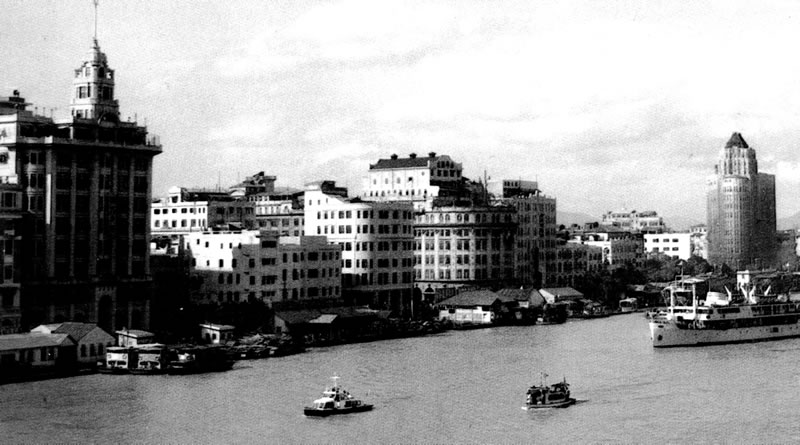
We begin along Guangzhou’s historic riverfront, often described as the old Guangzhou Bund. Buildings and streets dating from the 1880s to the 1950s introduce the city’s commercial, river-port and architectural history before we continue west toward Xiguan.
This stop provides the historical background for understanding how old Canton’s foreign trade, waterfront development and local neighborhoods were connected.
Stop 2: Shamian Island

Site of the foreign district on Shameen Island, Canton, in the 1850s, based on a photograph by John Thomson.
Shamian is connected with Guangzhou’s treaty-port history and the former British and French concession area. It adds an international trade and colonial history layer to the old Guangzhou story.
At this stop, you will learn how tensions surrounding the Canton Trade System helped lead to the First and Second Opium Wars, why Shamian Island later became a foreign concession, and the history and stories behind its buildings. This section is especially interesting for international visitors from Britain, Australia and other countries with historical connections to British maritime trade in China.
Stop 3: Qingping Chinese Herbal Medicine Market
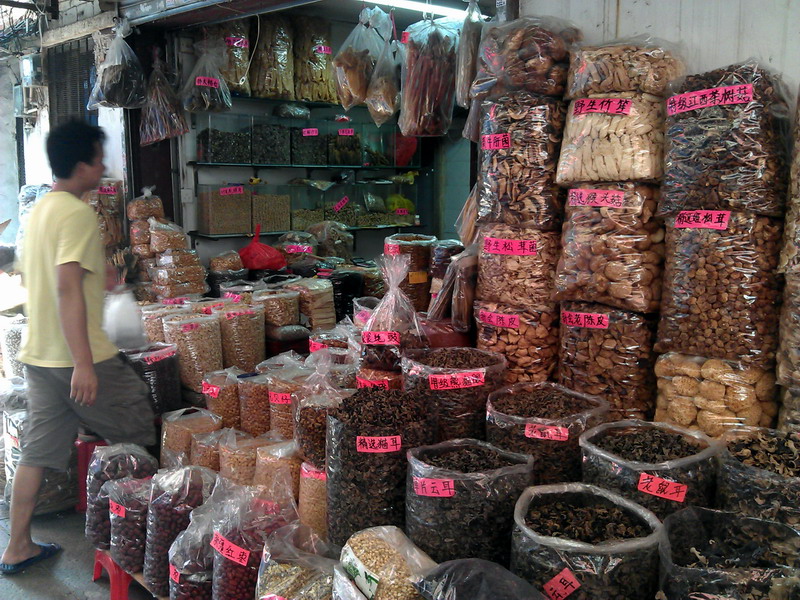
Qingping is one of the most distinctive market areas in old Guangzhou. Here you can learn about Lingnan herbal culture, traditional Chinese medicine ingredients, dried goods, local health practices and the Cantonese approach to food and wellness.
Stop 4 Lunch: Local Snacks and Cantonese Food Culture
Food is an important part of this Guangzhou old city tour. Lunch may include wonton noodles, rice rolls, local snacks or other everyday Cantonese dishes, depending on the route, timing and your appetite.
This is not a commission-based food route. Food stops are selected for local character, route efficiency, quality and cultural value.
Stop 5: Shangxiajiu and Traditional Commercial Streets
Shangxiajiu is one of Guangzhou’s best-known old commercial areas. It is associated with arcades, old shops, Cantonese restaurants, tea houses and the commercial life of old Xiguan.
Instead of treating it only as a shopping street, we explain how its architecture and business culture reflect Guangzhou’s urban development. During this part of the route, we will also stop for a Cantonese dessert when timing and appetite allow.
Stop 6: Old Backstreet Alleys, Local Lanes and Traditional Wet Market
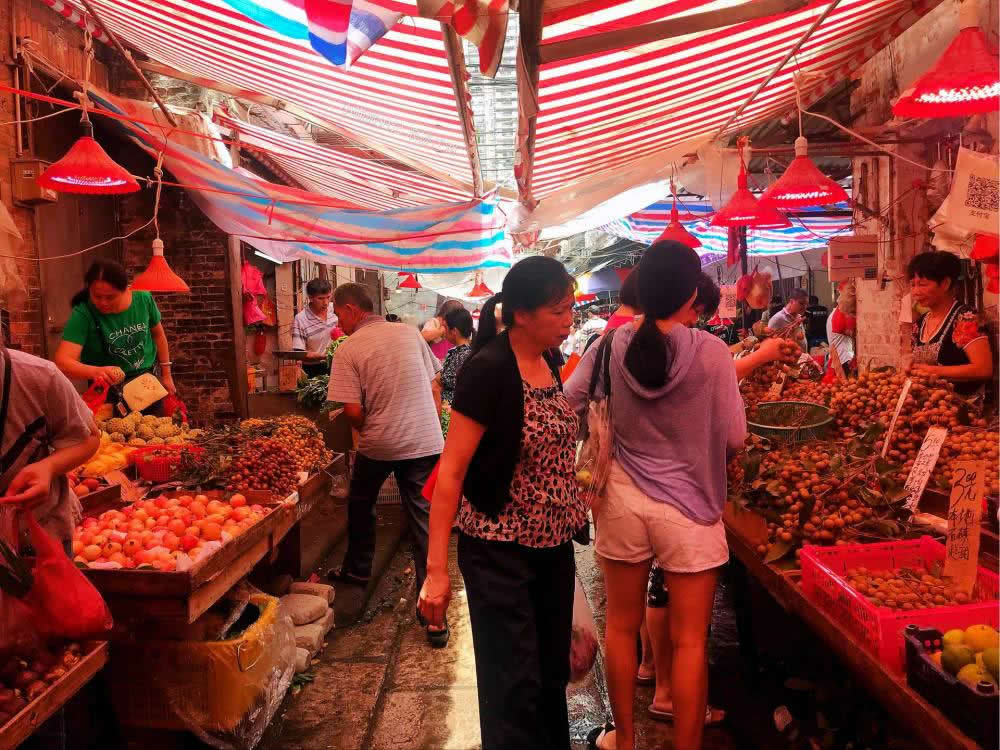
Beyond the renovated heritage streets, Xiguan’s backstreet alleys show a more local and less polished side of Guangzhou. These lanes include older homes, small shops, traditional doors, balconies and traces of everyday Cantonese neighborhood life.
The route also includes a traditional wet market when operating conditions allow. You can observe daily shopping habits, seasonal produce, fresh ingredients and why freshness is central to Cantonese home cooking.
Stop 7: Lychee Bay and Old Canton Water Culture

When a local performance is taking place, you may see traditional Cantonese opera beside Lychee Bay.
Lychee Bay is connected with Guangzhou’s old water landscape and the Lingnan lifestyle. Its waterside scenery, local leisure culture and nearby traditional streets provide a gentler view of old Canton.
Stop 8: Renwei Taoist Temple and Local Folk Beliefs
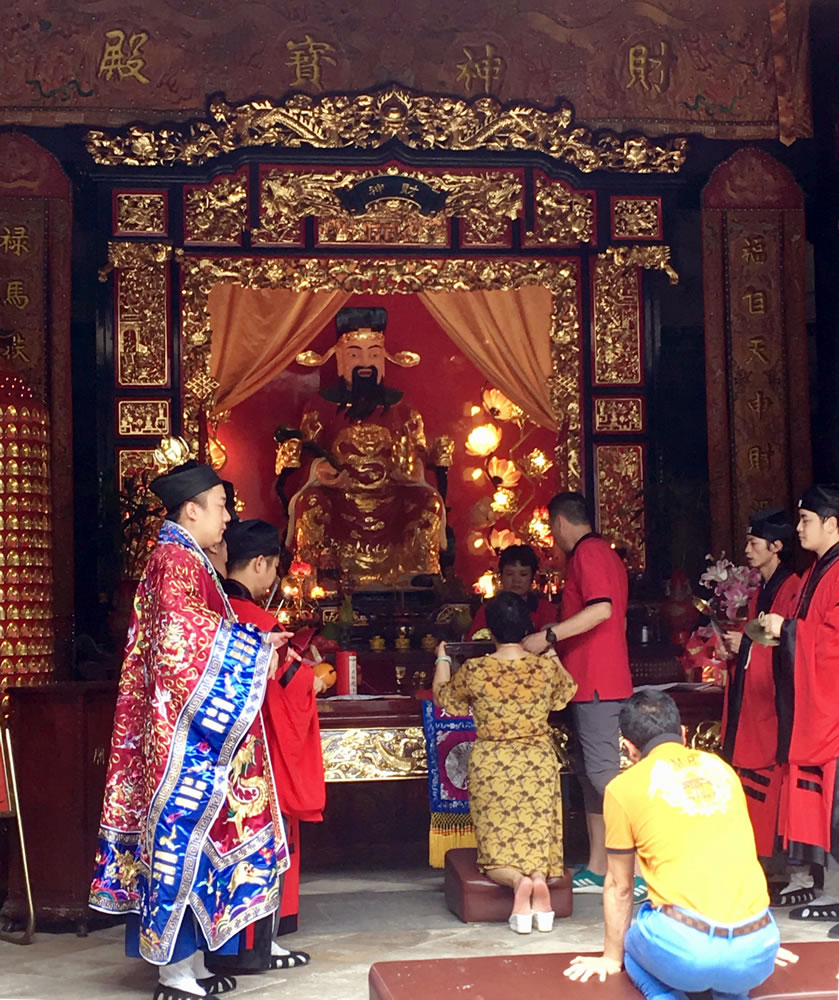
Renwei Taoist Temple is not a ticketed sightseeing temple like the Temple of the Six Banyan Trees, and it is not a tourist-oriented temple in a major visitor district like Dafo Temple near Beijing Road. It is a living neighborhood Taoist temple where local worshippers still come for everyday religious practice. There is no admission fee, and photography is not permitted inside the temple.
Inside, you can still see many forms of traditional Cantonese architectural craftsmanship also found at the Chen Clan Ancestral Hall, including wood carving, brick carving, lime sculpture and mural painting. The visit is also an opportunity to understand Taoism, community worship, local folk beliefs and the spiritual life of old Xiguan neighborhoods.
Optional Evening Visit: Yong Qing Fang and Enning Road

The old neighborhood during redevelopment, with the Cantonese Opera Art Museum under construction.
Yong Qing Fang is usually better visited independently in the evening. Almost all of the buildings visitors see today have been renovated or rebuilt. During more than ten years working as a local guide, I watched the original neighborhood being demolished and the present attraction gradually constructed.
Some guides say, “You have not been to Guangzhou if you have not visited Yong Qing Fang.” This is commercial promotion rather than an accurate description of Guangzhou’s history. Before redevelopment, Yong Qing Fang itself was a small lane, not the entire area now marketed under that name.
The original lane included Luanxing Hall (銮兴堂), a Cantonese opera guild hall that provided accommodation for the “Five Military Tigers” and martial-role performers. Nearby streets also contained former homes of well-known Cantonese opera artists.
Today, Yong Qing Fang has become a popular social-media check-in area. It can still be a pleasant place for an evening stroll when you have free time, but it is often extremely crowded on weekends and public holidays.
Half-Day Guangzhou Old City Tour
This tour can be arranged as either a compact 3-hour introduction or a fuller 4-hour historical and cultural walk. The route is private, so the pace and food time can be adjusted within the selected duration.
- 3-hour route: Stops 1–5, covering the Guangzhou Bund, Shamian Island, Qingping Market, local food and Shangxiajiu.
- 4-hour route: Stops 1–8, covering the Guangzhou Bund, Shamian Island, Qingping Market, local food, Shangxiajiu, Xiguan backstreets, a wet market, Lychee Bay and Renwei Taoist Temple.
- Best for: first-time visitors, history lovers, food lovers and travelers interested in local Cantonese culture.
- Tour style: a private walking tour with historical and cultural explanation rather than a rushed sightseeing checklist.
Summer Walking Tour Policy: Mid-May to Early October
Guangzhou summers are extremely hot and humid. In recent years, El Niño-related climate anomalies have also contributed to periods of more intense heat. For comfort and safety, we do not offer this walking-only tour during the hottest part of the year, from around the Start of Summer (Lixia) to the Mid-Autumn Festival — approximately mid-May to early October.
During this period, the Old Canton / Xiguan walking sections can instead be incorporated into a private city tour with a vehicle and driver. This reduces prolonged outdoor walking, allows air-conditioned transfers between areas and makes it possible to cover a broader range of Guangzhou in one day.
Please see our Guangzhou Private City Tour: Old Canton, History & Modern Guangzhou for the summer-friendly car-assisted option.
Guangzhou Old City Tour Prices
The price depends on the selected tour length and group size. Prices below are the total private-group price, not a per-person charge.
| Tour Duration | 1 Guest | 2 Guests | 3 Guests |
|---|---|---|---|
| 3-Hour Xiguan (Sai Kwan) Walking Tour | US$130 | US$150 | US$170 |
| 4-Hour Guangzhou Old City Food & Culture Walk | US$160 | US$180 | US$200 |
Notes: These are total private-group prices for 1 to 3 travelers. Food, drinks, entrance tickets and the guide’s meal are usually not included unless arranged in advance. Groups larger than 3, special detours or other custom arrangements require a separate quote.
Who Is This Guangzhou City Tour Best For?
- Travelers searching for a private Guangzhou city tour with real local culture.
- Visitors who want to explore old Guangzhou instead of only modern landmarks.
- Guests interested in the old Guangzhou Bund, Shamian Island, Qingping Market, Xiguan backstreets, Lychee Bay and Renwei Taoist Temple.
- Food lovers who want local snacks, desserts and Cantonese food culture.
- History travelers who want to understand old Canton, treaty-port history and local neighborhoods.
- Travelers looking for a Guangzhou half-day tour with a private local guide.
Who May Not Be Suitable for This Tour?
- Travelers who only want a rushed checklist of modern landmarks.
- Guests who want a large group bus tour with fixed shopping stops.
- Visitors who are not interested in history, local food or old neighborhoods.
- Travelers who expect all food and drinks to be included in the base guiding fee.
- Travelers visiting from approximately mid-May to early October who specifically want a walking-only tour; during this period we use a car-assisted format instead.
Why Book with Janvi Tours?
Janvi Tours focuses on private Guangzhou tours with deeper local interpretation. Instead of giving a standard script, we explain the city through history, food, architecture, old neighborhoods, migration, trade and everyday Cantonese life.
This is especially important in old Guangzhou. Many alleys, shops and buildings may look ordinary without explanation, but they become meaningful when you understand the stories behind them.
Our goal is to help you understand Guangzhou, not simply move you from one attraction to another.
FAQ: Guangzhou Old City Tour and Sai Kwan / Xiguan Walking Tour
What is the best old city area to visit in Guangzhou?
Sai Kwan / Xiguan is one of the best areas for an old Guangzhou city tour because it combines traditional neighborhoods, local food, old commercial streets, Cantonese culture, Yong Qing Fang, Lychee Bay and easy access to Shamian Island.
Is this a private Guangzhou walking tour?
Yes. This is a private tour, so the route, pace, food stops and cultural focus can be adjusted according to your interests, walking ability, weather and available time.
How long is the Sai Kwan / Xiguan walking tour?
The compact route lasts about 3 hours and covers Stops 1–5. The fuller route lasts about 4 hours and covers Stops 1–8.
Can this tour include Shamian Island?
Yes. Shamian Island can be included if timing allows. It adds an important layer of treaty-port and foreign concession history to the old Guangzhou route.
Can this tour include local food?
Yes. Stop 4 is the lunch and local-food section of the route. Depending on timing and appetite, it may include wonton noodles, rice rolls, local snacks or other Cantonese dishes. A Cantonese dessert can also be included around Shangxiajiu.
Travelers whose main interest is Cantonese food rather than old-city history may prefer our Guangzhou Food Tour, which focuses on scheduled tastings and local food culture.
Is this tour suitable in summer?
From approximately mid-May to early October, Guangzhou is very hot and humid, and in recent years El Niño-related climate anomalies have contributed to episodes of more intense heat. During this period we do not offer the walking-only version. The Old Canton / Xiguan walking sections are instead combined into a private city tour with a vehicle and driver. Please see our Guangzhou Private City Tour: Old Canton, History & Modern Guangzhou.
What is the difference between a Guangzhou city tour and this old city tour?
A general Guangzhou city tour may focus on major landmarks such as Canton Tower, Chen Clan Ancestral Hall, Beijing Road and Pearl River views. This old city tour focuses more deeply on Sai Kwan / Xiguan, old Cantonese neighborhoods, food culture and local history.
Is this a good half-day tour in Guangzhou?
Yes. The Sai Kwan / Xiguan walking tour is one of the best half-day options for travelers who want a meaningful introduction to old Guangzhou without spending a full day.
How much does the Guangzhou old city tour cost?
The private 3-hour Sai Kwan / Xiguan walking tour costs US$130 for 1 guest, US$150 for 2 guests and US$170 for 3 guests. The 4-hour food and culture walk costs US$160 for 1 guest, US$180 for 2 guests and US$200 for 3 guests.
Do you offer hotel pickup?
For walking tours, we can usually meet at your downtown hotel or a convenient metro station. During the hot-weather period, please refer to our separate private city tour with vehicle and driver.
Can this tour include Qingping Chinese Herbal Medicine Market?
Yes. Qingping Chinese Herbal Medicine Market can be included when timing and opening conditions allow. Travelers learn about local herbal culture, ingredients, and Cantonese health habits.
Will we visit old backstreet alleys in Xiguan?
Yes. The tour includes old backstreet alleys showing local life, traditional doors, small shops, and everyday neighborhood activity.
Is Renwei Taoist Temple included in the longer route?
Yes. Renwei Taoist Temple is Stop 8 of the 4-hour route. It is a living neighborhood Taoist temple used by local worshippers rather than a ticketed sightseeing temple. Admission is free, photography is not permitted inside, and visitors can learn about Taoism, local folk beliefs, community worship and traditional Cantonese architectural crafts.
Can this tour include a traditional wet market?
Yes. When timing allows, the route can include a traditional open-air wet market, showing local produce, seafood, and food preparation habits.
Should I visit Yong Qing Fang during the guided tour?
Yong Qing Fang is usually better visited independently in the evening. Most of the present buildings were renovated or rebuilt, and the area is now highly commercialized. It can be a pleasant place for a free-time stroll, but weekends and public holidays are often extremely crowded.
Book a Private Guangzhou Old City Tour
If you want to experience old Guangzhou with a local guide, Janvi Tours can help you plan a private Sai Kwan / Xiguan walking tour, half-day Guangzhou old city tour or food and culture walk.
Please contact us with your date, hotel location, number of travelers and whether you prefer the 3-hour or 4-hour route. From approximately mid-May to early October, the walking-only tour is not offered; please book the car-assisted Guangzhou Private City Tour instead.